The California Native Vertical Garden

Last weekend I went to see the Drew School vertical garden by Patrick Blanc, the French botanist who started the current green wall craze. He designed a wall in San Francisco that was installed this past February . I was a little skeptical of the whole green wall thing, but then looking up at his wall — four stories high of California natives with over 100 species — my doubts evaporated. The whole thing absolutely overflows with enthusiasm for plants. Two big walls covered in natives, what’s not to love.

A pair of gardeners were doing maintenance while I was there. At first I was a little bummed to see this big orange cherry picker in front of the wall, but then I realized that it was a great opportunity to find out about the wall. I mean, I see this thing and I wonder how much does it cost, how will it age, how much maintenance does it need, and who will give me one for Christmas? Watching them work, I was impressed at how easy the maintenance actually seemed. Like any other gardeners, they cut the plants back with Felcos; they just let the green waste fall to the sidewalk and they barely even had to bend over to work. Progress was steady. It looked quite pleasant.

The plants are essentially growing hydroponically. The black flannel acts as the planting medium for the roots, and water mixed with nutrients drips down the wall, collects at the bottom and then recirculates. This is the first time anyone has ever tried something like this with California natives (he usually uses tropical plants), so the project was considered something of an experiment. Some species like Oxalis oregana or Mimulus cardinalis seem like reasonable candidates for a hydroponic wall, but some of the others like Artemisia tridentata and the Fremontodendron were a shock to me. It’s hard to tell from the photos, but up at the top there’s a Ribes sanguineum, a couple of bushy Mallows, and at least one Ceanothus.

The gardeners said they had done some replanting in September, but this was the first full maintenance pruning. They were cutting things back to do a one-year assessment of the planting and see how everything was growing. After a year of growth, some plants were starting to cover others. The Beach Strawberry was running all over the place, the Dudleyas were getting covered by other plants the same as they did in the Academy of Sciences green roof, the Lupines were short-lived, Penstemon heterophyllus looked like it was also going to be short-lived, but overall the plants were doing really well. The shrubs up top were growing exuberantly, maybe a little too exuberantly; the shade groundcovers down towards the bottom had the best year-round appearance. I found that in the places where the fabric showed between the plants, it didn’t bother me or diminish the effect.

Pretty healthy for a bunch of plants on the side of a building.

I definitely want to make it back in the spring when a lot of the plants have grown back in and are blooming. It really does have tremendous impact when you see it on the street.

Changes to the Veggie Garden

This weekend I pulled out our summer veggies and started most of our winter plants. It was a little late to be taking things out; our basil was starting to brown from the cold, the green beans were being eaten by a pest, and the zucchini was still healthy but had slowed its production. (I had planned to wait until we finished our garden shed, but that project has gotten more ambitious and is taking longer than I expected. The shed will be very cool when it’s finished, but for now it’s just at that tantalizing phase where we can see what it will be like but can’t yet use it.) After five winters at this garden, everything this winter will be plants we’ve grown before — favas, snap peas, beat greens, chard, kale, broccoli, parsley, radishes. There’s less of it this year, as our veggie garden has been slowly turning into a fruit garden, with blueberries, huckleberries, currants, and strawberries now filling up the edges

The other change from past winters is the stone edging on three of the four beds. In August, I pulled out the old scrap wood edging I built five years ago and I replaced it with scrap stone from several recent projects. Some of the stone is a little small and raggedy on the backsides of the beds, but overall I had good stuff to work with and it was fun working with four different kinds of stone in one little area. I came up one stone short with the cabernet wall and I bought the two corner stones to use with the beige sandstone, but it was a near-perfect quantity with about eight of the little bluestone squares leftover and nothing else. The saw-finished sandstone is more contemporary than I would have chosen for our garden, but I really like it.

Without the zucchini it looks a little bare and and in need of more tidying, but the stone just makes it so much better.
Barker Dam

My last post on Joshua Tree is from Barker Dam, aka Big Horn Dam. The park is a desert, but it received more rainfall a hundred years ago and homesteaders tried raising cattle there. A couple of ranchers in the area made a seasonal reservoir, first a rancher named Barker in the early 1900’s, then William Keys fifty years later. Personally, I thought it was a little weird to see this empty reservoir and rather jury-rigged dam in the middle of the desert. Keys was the kind of guy who would kill someone in a dispute and then make a stone marker to commemorate/brag about it afterwards, and some of that character (or lack thereof) shows in the design and craftsmanship of the dam. But the birds seem to like it and the visuals are interesting and it’s a stone structure on the national register of historic places, so here it is.


The reservoir was done in a couple of phases; the bottom nine feet are faced with rock and the upper six feet of concrete were added by Keys in 1950. He made a sign in a smear of concrete to commemorate/brag about this too.


The concrete had rock dumped in between the forms to save money. You can actually make a pretty nice wall this way if you place the rock a little more carefully and scrub more concrete off the faces off after you take away the forms.

Behind the dam there’s an interesting pattern of bathtub rings. Apparently the reservoir still fills to the top, flooding twenty acres during the wettest time of year.


There’s a second, lower dam below the main one, full of cattails living off the seepage.


And a cattle trough below the second dam. All in all, a funky little area.

Ryan Mountain

‘Perspective — that is the reward for hiking to the top of Ryan Mountain.’ (J. Tree signage)
In Joshua Tree there’s a peak named Ryan Mountain. I might have resisted the bait, but then at the trailhead I found a sign proclaiming that ‘The…hike up Ryan Mtn. is a reaffirmation of life. The pulse accelerates, the senses become more acute, and one may renew the acquaintance of lungs and muscles previously taken for granted.’ (Robert B. Cates, Joshua Tree National Park: A Visitor’s Guide 1995) So what’s a blogger named Ryan to do? I of course want my blog to be reaffirming. So, photos from the hike are below.

Occupy Joshua Tree

Occupy Joshua Tree
Anita and I spent most of last week at Joshua Tree. It’s one of my favorite places and very photogenic. These are some of the photos I took.

Years ago when I first saw Joshua trees, I thought they were just about the goofiest things growing on the planet. After working with plants for a number of years and seeing a lot more succulents, I don’t find them nearly as strange. Still somewhat Dr. Seuss-y, but not nearly as much.


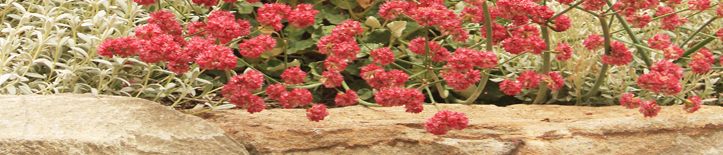
The showiest color in the park was in the red seedheads of a buckwheat. The foliage was quite red too. Really striking against the dried grass or stone.


Some of the spots in the park look like the work of a talented gardener with a loose, naturalistic style. This path, (click to see it larger), looked like it had been deliberately edged with red and yellow foliage.


The Sulfur Buckwheats were still in bloom. They were doing the same thing — blooming from the cracks in the boulders — when I was in the Buttermilks around this same time last year.


There is one species of manzanita in the park, A. glauca. I saw a few nice healthy ones, but the most beautiful was a deceased one. I don’t think I’ve ever had that opinion about a plant before.

And the desert can make a dead car look beautiful too. A great, great place.

Nassella laevissima

This is one last thing after several posts about lawn alternatives and sort of a bleg. I’m quite taken with Nassella laevissima, a tussock grass from Chile, in a beautiful planting at the UC Botanical Garden. I’ve been to that garden a bunch of times this year, and that meadow always strikes me as just about the best thing in the entire garden. But I’ve never seen it growing anywhere else around here. I probably saw it when I was in Chile fifteen years ago; I remember lots of beautiful grasses like this and it’s listed on the plantlists for some of the parks I visited. But no one seems to grow it here; I haven’t seen it in any of the new sod mixes, on any of the availability lists, at any of the specialty grass nurseries, or in anyone’s garden. Even online all of the photos are of this one single planting at the UC. I asked a friend who works at the botanic garden and she says it has been there for years and always looks this great with very little maintenance. Also, she says it doesn’t reseed like its poorly behaved relative, Mexican Feather Grass. So I’m just curious about why no one else grows it here in California. If anyone does know anything about it, please let me know.
Categories
- bay area (7)
- miscellaneous (13)
- plants (69)
- california natives (34)
- bulbs (2)
- wildflowers (10)
- edibles (3)
- trees (14)
- california natives (34)
- private gardens (34)
- lawn to garden (12)
- public gardens (50)
- tilden (9)
- UC Berkeley (3)
- sculpture (32)
- sketchbook (40)
- stone (74)
- sustainability (4)
- trails (13)
- various critters (5)
- wildlands (15)
-
MY FIRM
- cummingslandarch
Garden Blogs -- California
- A Growing Obsession
- Bay Area Tendrils
- Blue Planet Garden Blog
- Cactus Jungle
- Camissonia's Corner
- Curbstone Valley
- Deborah Small's Ethnobotany
- Far Out Flora
- Floradora
- Form and Foliage
- From Seed to Table
- GardenBook
- Gayle Madwin's Journal
- Gossip in the Garden
- Laguna Dirt
- Lost in the Landscape
- My Back 40 (Feet)
- Nature ID
- Overall Gardener
- Rooted in California
- Sierra Foothills Garden
- Town Mouse & Country Mouse
- UCB Botany Photo of the Day
- Wild Suburbia
Garden Blogs -- Out of State
- Arizona Plant Lady
- Bicycle Garden
- Cold Climate Gardening
- Creative Flux
- Danger Garden
- Digging
- Ellis Hollow
- Fairegarden
- Flower Hill Farm
- Garden Rant
- Garden Walk, Garden Talk
- Gardener's Eye
- Gardening Gone Wild
- Greggo's Garden
- Grounded Design
- In the Garden
- Jean's Garden
- Jeffrey Bale's World of Gardens
- May Dreams Gardens
- New Perennialist
- Outside Clyde
- Plant Fanatic in Hawaii
- Randy and Meg’s Garden Paradise
- Restoring the Landscape with Native Plants
- Rhone Street Gardens
- Seed Scatterer
- Serenity in the Garden
- Studio G
- View from Federal Twist
- WiseAcre Gardens
- Zanthan Gardens
Garden Blogs -- Outside the US
Graphic/Art Blogs
Miscellaneous Blogs
Nurseries for California Natives
Stone Sites
- Building Stone Institute
- Clonehenge!
- Dry Stone Conservancy
- Dry Stone Walling Assn. of Canada
- Geotripper
- In the Company of Stone
- Language of Stone
- Megalithic Portal
- Megaliths and Sheep
- Noguchi Museum Tumblr
- Oakland Geology
- Quarries and Beyond
- Rock Art Blog
- Stone Art Blog
- Stone Project
- Stone Soup
- Stone World
- Stone-Ideas
- StoneChat
- Stories in Stone
- The Stone Foundation
- WallingWonderland
- Walls Without Mortar
Useful Lists
- Audobon Plants Birds List
- Deer Resistant Plants
- Dry Gardening Plant List
- Fire Resistant Guidelines
- Fire-Resistant Plant List
- Fruit Info for SF — CRFG
- Fruit Info for SF — UC Davis
- Oak Root Fungus Lists
- Planting Times for the Bay Area
- Planting Under Eucalyptus
- Planting Under Oaks
- UC Bird Alliance
- WUCOLS Database
- Yerba Buena Nursery Deer Page
Useful Websites
- BugGuide
- Cal Poly Tree List
- California Horticultural Society
- California IPM
- Center for Urban Forest Research
- Dictionary of Botanical Terms
- Las Pilitas Cal. Native Plant Database
- Pacific Bulb Society
- San Marcos Cal. Natives Page
- StopWaste
- Stormwater Solutions
- Suncrest Plant Database
- Sunset Zones
- Sustainable Sites Initiative
- Tom Clothier’s Garden Walk & Talk
- Urban Farmer
Useless Websites
-
Archives
- September 2026
- March 2026
- January 2026
- December 2025
- October 2025
- September 2025
- August 2025
- June 2025
- May 2025
- March 2025
- November 2024
- September 2024
- August 2024
- January 2024
- October 2023
- September 2023
- August 2023
- June 2023
- March 2023
- January 2023
- December 2022
- October 2022
- September 2022
- August 2022
- October 2020
- April 2020
- March 2020
- February 2020
- January 2020
- December 2019
- November 2019
- October 2019
- September 2019
- June 2019
- May 2019
- February 2019
- January 2019
- December 2018
- November 2018
- October 2018
- September 2018
- July 2018
- June 2018
- May 2018
- April 2018
- March 2018
- December 2017
- November 2017
- October 2017
- September 2017
- August 2017
- July 2017
- June 2017
- May 2017
- March 2017
- February 2017
- December 2016
- November 2016
- October 2016
- June 2016
- May 2016
- April 2016
- March 2016
- February 2016
- December 2015
- October 2015
- August 2015
- July 2015
- June 2015
- May 2015
- April 2015
- March 2015
- February 2015
- December 2014
- October 2014
- September 2014
- August 2014
- May 2014
- April 2014
- March 2014
- February 2014
- December 2013
- November 2013
- October 2013
- September 2013
- July 2013
- June 2013
- May 2013
- April 2013
- March 2013
- February 2013
- January 2013
- November 2012
- October 2012
- September 2012
- August 2012
- July 2012
- June 2012
- May 2012
- April 2012
- March 2012
- February 2012
- January 2012
- December 2011
- November 2011
- October 2011
- September 2011
- August 2011
- July 2011
- June 2011
- May 2011
- April 2011
- March 2011
- February 2011
- December 2010
- November 2010
- October 2010
- September 2010
- August 2010
- July 2010
- June 2010
- May 2010
- April 2010
- March 2010
- February 2010
- January 2010
- December 2009
- November 2009
- October 2009
- September 2009
- August 2009
- July 2009
- June 2009
- May 2009
- April 2009
- March 2009
- February 2009
- January 2009
- December 2008
- November 2008
